Monday, April 20, 2015

The Tears of a Clown


There's this song that's helped me through some dark times about how you have value and nobody can tell you different:  "Beautiful" by Eminem.  I wish I could share it here, but some of the lyrics are pretty vulgar.  Oh wait....


You're welcome.

There's a certain point in the song that really stuck with me because I can relate to it.  Minus the cuss words, that section says, "I don't need no man servant Trying to follow me around, Laugh at every single joke I crack And half of them ain't even funny like "Ha!, Marshall you're so funny man, you should be a comedian!" Unfortunately I am, but I just hide behind the tears of a clown." 

I have been thinking about this concept for awhile now.  To me the "tears of a clown" idea is about how you've become known as a joker in a group, whether it's your group of friends, coworkers, or fellow activity people.  People just know you as the guy who has the best jokes or one-liners, so they know they can count on you for a laugh when they need one.  However, it gets to the point where you start to feel that your humor is the only reason they keep you around.  I've already talked before about how insecure I can get, so maybe this is just that talking, but I'm sure anyone else who's become the group comedian knows what I'm talking about.  They like you because they make you laugh.  So much so, that they don't really know the real you.  They don't know that the comedy may be just a way of disguising things like insecurity or depression.  And, when you really do have something serious to talk about, people probably won't take your concerns very seriously.  Again, this may just be me, as I have had a problem getting people to take me seriously pretty much my whole life.  But, I'm kind of not thinking so.  There are at least two other guys that you have probably heard of that would know what I mean.  If only they were still with us...

One was Chris Farley.  He was known for being the funny, fat guy on Saturday Night Live and in movies like Tommy Boy or Billy Madison.  This man truly had some "tears of a clown," though.  This guy suffered from severe insecurity, depression, and a serious drug problem.  He never knew if people were laughing with him or at him, which I am very familiar with.  He even got in a physical fight with David Spade once because he felt left out of Spade's night of fun with Rob Lowe.  He eventually died of a drug overdose on October 25, 1997.  

The other, of course, is the Captain himself, Robin Williams.  I believe he summed up my point better than I could with this quote:  


This man is one of the funniest men who ever lived.  That's not just my opinion, that's a fact, Jack!  But, I think the world now knows at least a small part of who he really was.  He had severe depression, which his fellow actors now confirm that they were suspicious about for a log time.  Ethan Hawke, who acted with Williams in Dead Poets Society, now says that he could always tell that Robin wasn't happy, and it made him sad because Williams gave them all so much joy, but he felt like none of them were making him as happy as he made them.  He committed suicide last August, and I think his death was the saddest I've ever been about a celebrity death.

At first, I assumed I was sad because the world had lost such a great comedian and actor.  I had just seen Patch Adams shortly before this happened and wondered why he couldn't take his own advice.  But, now I know the truth.  I can relate with him being the funny man who tries to hide his pain inside.

Now that I'm thinking about it, I'm not really sure why I'm writing all of this down.  Maybe I'm just trying to vent.  But I also want everyone to think about the people they know and think twice before they pin a label on somebody.  You probably don't know half of who they are.

Still, as a clown, I feel obligated to finish with something funny here, but I can't think of anything right now, so I'll let the master do it.


Wednesday, April 1, 2015

My Top 10 Movies

Yes, I am well aware of the fact that I have already talked about my top 10 movies, maybe not on here, but on Facebook or something.  So, some of you may have seen the link to this and wondered why you should bother reading this long blog when you've already seen the list, you know what I like and you know how this ends.  So, why should you read this?  I have absolutely no idea.  Just listen to me banter...

So, if you don't know me, then you should know that I seriously love movies of all different sorts.  I try not watch movies that will dumb me down to the level that Hollywood would like.  I like to watch movies that are artistically done, but without becoming one of those snobs that's always like "Oh, I would never watch that movie.  I appreciate movies."  It's a delicate balance, but one I try to maintain.  I can watch a movie like Napoleon Dynamite and appreciate it for what it is.  I'm not sure where I've set the bar for what entertainment I will and won't partake in, but that's another post for another day.  I've gotten really off track here...

Moving right along here, I will list my top 10 favorite movies and why I like them.  And, yes, I am already aware of the fact that I cheated by combining movies in some of these cases, but it's my blog, so I can do whatever I want.

Before the list, here are a few (actually, quite a few) honorable mentions.

The Passion of the Christ, Star Wars original trilogy, Bruce Almighty, The Big Lebowski, Stand By Me, The Avengers, The Breakfast Club, Ferris Bueller's Day Off, Napoleon Dynamite, Mud, The Sandlot, The Green Mile, Good Morning Vietnam, Good Will Hunting, almost every Christopher Nolan film (the other one made the list), Cinderella Man, Braveheart, Gran Torino, Raging Bull, Casino, Saving Private Ryan, Schindler's List, Perks of Being a Wallflower (shut up, it's good), Toy Story films, Finding Nemo, Monsters Inc., Veggietales, Forrest Gump, Pulp Fiction, The Princess Bride, Monty Python and the Holy Grail, Chariots of Fire, Rounders, American Sniper, Slumdog Millionaire, A Few Good Men, and I am so done with this list...moving on to the top 10.

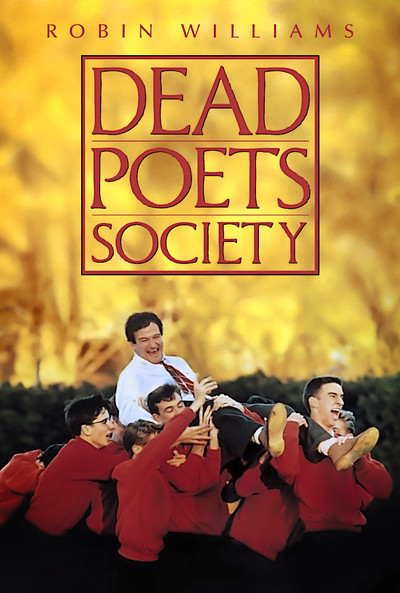
10.  Tie-Mr. Holland's Opus and Dead Poets Society


I don't think I have to explain too much about why I like Dead Poets Society.  That has been covered elsewhere on this blog.  I like this movie simply because I find it inspiring.  (And Robin Williams, of course.)  Often, when I find myself in a situation where I am reluctant or afraid to take action, I remind myself to Carpe Diem.  Sometimes, that can lead to disappointment, but at least I play a hand.  Don't settle.  If you have a chance to do something extraordinary, go for it.


Mr. Holland's Opus is another inspiring, feel-good movie that holds a special place for me.  I don't know too many other people my age who have seen this, which is a shame.  For those of you who don't know, this movie is about a man who wants to write an epic piece of music but must take a job teaching music at the high school to pay the bills.  He is initially unhappy about this position, but he starts to see that he can really have an impact on the students' lives when he puts his mind to it.  This movie actually has some sentimental value to me, as my dad once used it as part of a learning experience for our family.


9.  The Departed


As strange as it may sound, I am a fan of the gangster movie genre, and almost nobody (maybe not anybody at all) can do it as well as Martin Scorsese.  This, in my opinion, is his second best gangster film.  (I'll get to his best one in a bit.)  Scorsese described this movie as his only movie with a plot when it was first released.  The movie tells the story of two rats, one in the police force, the other working with a crime boss, and their race to find the other guy out.  The suspense in this movie is non-stop, and the outcome is never certain until the end of the movie.  The movie does a good job of showing the exhausting toll that a double life can have on a person.  You will probably experience the same exhaustion during the movie, but it's a good exhaustion.  The movie also boasts an all-star cast (Matt Damon, Leonardo Dicaprio, Mark Wahlberg, Alec Baldwin, Martin Sheen, and best of all, Jack Nicholson).  The soundtrack is also amazing (pretty much always playing either Irish rock or Rolling Stones songs, but it works).


8.  Fight Club


Lots of testosterone in this one.  In this film, Edward Norton plays a nameless narrator who tries to fill holes in his life by buying things and going to support groups.  Eventually, he meets Tyler Durden, an anarchist/terrorist who helps him start up a group called Fight Club, which eventually escalates to full-blown terrorism.  (Spoiler alert) Ed Norton eventually finds out that Tyler is only the other side of his split personality, so he realizes it's up to him to stop the madness.  So, this movie has become known as THE movie for the alienated males.  It does not advocate passivity or mindless rebellion, in my opinion.  It asks you to search for some middle ground.


7.  The Aviator


I've already mentioned that I am a Scorsese fan, and this is one of his most underrated films, in my opinion.  Not too many people are familiar with the story of the genius-turned-paranoid-madman Howard Hughes, but I believe Martin Scorsese does an excellent job of bringing the story to life.  I love movies, so it was fun to see a movie about a movie maker that also became a plane designer.  Unfortunately, the combination of a plane crash, and opposition from a lot of people around him drives him slowly insane.  Hughes, though, becomes somebody anyone with high aspirations continually being hampered can identify with.  So, this movie has definitely earned its spot on my list.


6.  The Dark Knight


The best superhero movie ever made and that's a fact, Jack!  Unlike other films in this genre, the movie doesn't want to be just another action-filled shoot 'em up superhero smack-down film.  This one actually has some depth to it.  It provokes a lot of philosophical and spiritual thought and could definitely open the doors to some great conversations when the movie is over.  And Heath Ledger gives the most convincing super-villain performance I have ever seen.


5.  Lord of the Rings (entire trilogy)


What can I say, really?  This is, objectively, the best trilogy of all time.  It just gets better as it goes, and the end of it is fully satisfying, albeit very long, which will make it hard to hold your pee.  This series has everything:  great fantasy action, great visuals, great characters, great story, and even some great symbolism.


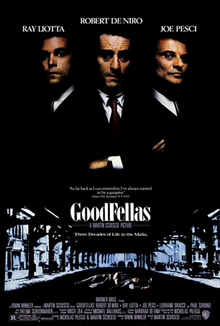
4.  Goodfellas


THIS is Martin Scorsese's best gangster film.  We follow the story of real life mobster, Henry Hill, as he works his way through the hierarchy of the mob and experiences a crushing downfall in the end.  What's interesting about this in addition to its realistic and gritty portrayal of the mob life is the fact that these characters all manage to be interesting and entertaining even though you know they're evil.  The three lead actors do a great job in this film and are totally convincing.  I like how this movie purposefully plays with your reaction to it.  At first, you might think the mob life sounds pretty appealing because of everything he has, but some of the downsides will definitely make you reconsider.  Anyway, great flick.


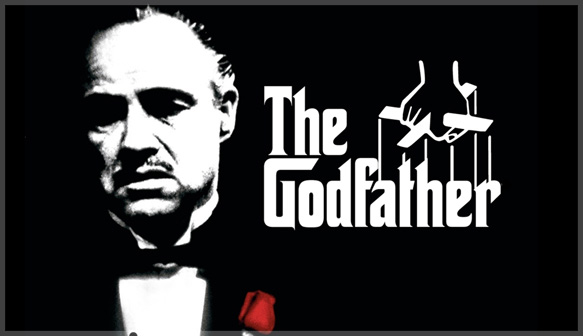
3.  The Godfather (Parts I and II)


This was what I meant when I said Scorsese might be almost the best gangster movie maker.  These films are without a doubt the best mafia movies in existence since the beginning of humanity.  Even though both of these films are around the 3-hour mark, they still manage to keep your attention for the whole thing, which is not easy to do.  These movies probably do the best job I have ever seen of making you care about the bad guys because they continually switch from their business life to their family life, until the two finally become one.  These movies are not meant to glorify crime, though, as Michael Corleone in particular falls hard.


2.  It's a Wonderful Life


Another classic film about how your life impacts so many others, even if you can't always see that.  Jimmy Stewart is my favorite actor of all time, and this was probably his best film (maybe Mr. Smith, I don't know).  Anyway, I always enjoy watching this film every year around Christmas time.  George Bailey's monologues always do it for me, and I always finish this film feeling better than when I started.


1.  The Shawshank Redemption (duh)


I think I've probably beaten this dead horse enough on this blog, so I'll just say it's an inspiring and hopeful film with a payoff that always leaves me feeling better about life in general.  To go more in depth on this movie, I have written an entire post about it elsewhere, so go read that if you haven't already.






Sunday, March 22, 2015

How Does Dead Poets Society Relate to Spirituality?


Last year, the world was rocked by the sudden, tragic death of Robin Williams, who many consider to be THE funny man of our times.  Who would have guessed how he was really feeling all this time? It's another tragic reminder that you can't judge an actor by their characters (RIP Mr. Williams.  Your loss will be felt by all.  I kind of relate to you myself.)

 I myself have often been impressed with how much talent he had.  He was a hilarious comedian, and his movie roles could be funny, whimsical, deadly serious, and even a little scary sometimes.  One of his most iconic movies is Dead Poets Society, which I briefly talked about in another post.  And I can't talk about this movie without saying "Carpe Diem" at some point, so I'll just say it now.  There it is.

So what does this movie have to do with spirituality?  Well, uh, Carpe Diem is like Latin, I think, and, uh, Jesus was Latin, I think, and, uh, stuff...okay, I'm just kidding.  Let's start over.

I am going the Christ figure route once more.  Robin Williams plays John Keating, a new teacher at a boarding school known for its sense of tradition and conformity.  Most of the teachers subscribe to these philosophies and prove to teach very boring classes.  However, Mr. Keating takes a different approach to his teaching style.  (Once again, the whole "in the place, but not of it" principle).  He takes his class out in the hall and teaches them the lesson that makes up the crux of the film, which is to "seize the day" and "make your lives extraordinary."  (Could that include making them "fishers of men?"  Yeah, I'm really reaching here.  Don't worry.  I'll get to the good stuff soon.)  

Mr. Keating slowly but surely changes the way these boys think of themselves and their lives.  First, he tells them about a club he was once part of called the Dead Poets Society where they met in a secret cave and let poetry sink in in a way they couldn't in a classroom.  So, the boys decide to bring back the club and follow his example.  They've become his disciples, if you will.  

He manages to connect with and help some of the boys on an individual basis.  He helps the shy new boy, Todd Anderson, find the poetic extrovert within himself.  He encourages the boys' leader, Neil Perry, to pursue his dreams of acting, rather than giving into his father's dreams for his life.  Mr. Keating wasn't directly involved in this one, but it was his influence that prompted Knox Overstreet to take a risk on calling the girl he liked.

At one point in the movie, the most reckless boy in the bunch, Charlie Dalton, takes a foolish risk to try to promote his ideas for the school and is nearly expelled.  Keating reprimands him for this and tells him a wise man knows when to be cautious, kind of the same way Jesus told Peter to put away his sword in the garden of Gethsemane.  

Unfortunately, a lot of people aren't in agreement with his philosophies, particularly Mr. Nolan, the headmaster.  He believes in teaching the boys to conform, rather than think for themselves.  So, he gets after Keating much the way the religious leaders did to Jesus.  Charlie Dalton's stunt just makes the administration all the more suspicious of Keating.  But, he always seems to have an answer for their complaints and continues on.

But, there are some people he can't handle.  Neil Perry's father is none too happy that Neil defied his wishes and performed in the play.  As a result, he pulls Neil out of the school and tells him he will send him to military school.  Feeling defeated from being forbidden to follow his dreams and frustrated by his inability to talk to his dad about them, he commits suicide (a similar fate to one of the disciples). 

The administration now needs a scapegoat for the incident because prestigious schools have been ruined because of things like this.  Their chosen target, of course, is John Keating.  (Forced to take the blame for something that wasn't his fault, when he was just trying to help.  Sound familiar?)  It is then that we see our Judas Iscariot in the story, Richard Cameron.  Cameron goes to the administrator and tells them everything about Keating and the dead poets society, and wholeheartedly cooperates with their plan to "crucify" Keating.  The other boys still want to remain loyal to Keating because of how much he's touched them, but they all do end up caving and signing the paper blaming Keating, much the way the disciples all ran and abandoned Jesus in his hour of need.  

But the story ends with a feeling of hope.  Even though, the boys were all forced to give in, they still manage to let Mr. Keating know that they stand with him by defying the headmaster and standing on their desks and chanting "Oh Captain, my Captain."  I know I've shared this scene before, but it's so awesome, I have to do it again.  


And I think it's significant that it was Todd Anderson who stood first.  Even though they had basically been forced to sign Keating's termination papers, they still decided to stand up for what they believe in in the end.  It's a choice we all must make sooner or later.  Even if we do make mistakes, it's never too late to do the right thing.  Will you?

So, maybe not the best parallel to the Gospel I've seen, but it's something...

Thursday, March 12, 2015

Where Does Evangelizing Begin?

As, Tom Cruise said in the movie, A Few Good Men, "It doesn't matter what I believe!  It matters what I can prove!"  (Or, Denzel Washington in Training Day.  Take your pick.)  I think it's a good philosophy that could apply in some ways to evangelization.  You can believe what you believe as strongly as you wish, but if you can't prove it with how you live your life, you're doing nothing.

Now, when you hear about evangelization, you probably think that's about people of faith just trying to bring the Gospel to non-believers, right?  Well, yes, that is a big part of it.  But, I think I would argue that believers need it just as much as non-believers.  Believers also often lose their way in life, and sometimes, it is the words or example of a fellow Christian that can help them get back on track.

Also, I don't think evangelization has to be overtly preaching the Gospel all the time.  Evangelization could also just mean showing love or kindness.  It has been said that "they will know we are Christians by our love," so that also needs to be taken into account.  Our kindness could change somebody's day or even their life.

Let me give you a recent example from my life.  I was on a retreat recently, and somebody I have known for awhile now gave a talk about how God has been working in her life.  But during the course of this talk, she revealed darker parts of her life where she started thinking things about herself that weren't true.  And the thing is, I knew her during this dark part, even though I didn't know what all she was going through.  But the point is, I could have refuted everything she thought.  But I never said anything.  Would her life have gotten a bit better sooner if I had said something then?  We'll never know.  Now, it's true that I didn't explicitly hurt her, but as Larry the Cucumber once said, "Sometimes, not helping is the same as hurting."  I actually apologized to this girl later on for not speaking up sooner.

So, you see?  Each of us has a responsibility to our fellow men and women to show them love and kindness.  It's not only a good idea, it should be our way of life.  Everybody needs to know that they are loved and cherished, and that should be our number 1 job as Christians.  

So, even if I were able to quote every Bible Scripture there is and pray with the best of them, it really doesn't mean a thing if I can't first do what Jesus said and "Love my neighbor as myself."  Only after I start with this step can I, as For King and Country eloquently put it, "Let my life be the proof of Your love."  

Some of you are probably reading this and thinking I've made some good points.  Others, more likely are probably reading this and thinking, "Man, if this gets any more cliche..."  Then you should probably stop reading this and go out to start evangelizing!  Seriously, go!


Friday, January 23, 2015

A Tale of Two Benjamins

(Special thanks to my good friend, Zach, for helping tweak this.)

Once there were two young men, named Benjamin.

The first man was a popular, well-liked young man that everybody respected.  He was very involved with his school and was a very likable fellow that had qualities about him that everyone seemed to find special.  He always seemed to have a kind word for everyone, and when he spoke, everybody listened.  Everybody felt like his friend when they talked to him.

The second Benjamin was a depressed loner.  He could never seem to find happiness, and he never felt truly accepted by anybody.  He spent most of his nights just trying to escape his emotions and, sometimes, resorting to self-harm, sadly.

Popular Benjamin was on top of the world.  He had just been elected president of the student council and was on his way to making the school a better place.  He had also just scored the winning point for his school’s basketball team that night, and there was a rumor going around that he would be the prom king.

Depressed Benjamin sat in his room all alone.  He had been there for three hours watching Netflix to try to escape the world and cutting himself, when the mindless TV comedies didn’t do the trick.  He had just recently started cutting deeper.

Popular Benjamin was elected prom king, as everyone knew he would.  The queen, of course, was the prettiest girl in the whole school, and everybody was certain that there had never been a luckier man in the history of their school.

Depressed Benjamin was fed up.  He was tired of all the hurt, the pain, and the emptiness.  He finally decided to do what he wished he had done a long time ago.  He went into his parents’ bedroom, went into a certain drawer, pulled out the item contained inside, and blew his own brains out.

The school was devastated.  Everyone had been so certain that Popular Benjamin had the perfect life and hadn’t a care in the world.  They never would have guessed that he had been dying inside for so long.  He finally revealed his true feelings with a gunshot.

..........

This is me.  This is you.  This is everybody.


Wednesday, January 7, 2015

How does "The Great Gatsby" Teach Spirituality?


Thankfully, the movie adaptation of The Great Gatsby starring Leonardo Dicaprio was pretty faithful to the book by F. Scott Fitzgerald, so I won't have to spend a whole lot of time comparing the two.  

The Great Gatsby is considered by many to be the great American novel.  I obviously wasn't alive back then, but from what I've heard, the story was a perfect example of the excess and apathetic attitude toward morals that characterized the Roaring 20's.  Actually, an interesting thing about the latest film version is that it uses a lot of modern music, like Jay-Z, for the soundtrack.  Yet, it still works because, when you stop and think about it, those mindless revelers we see aren't really that different from what we see now.  

That said, this spiritual analysis will be a little different from previous ones I've done.  God doesn't show up like He did in Bruce Almighty.  There are no Christ figures like Andy Dufresne in The Shawshank Redemption.  There are no metaphors for spiritual battles like there were in The Avengers.  This one is actually notable precisely because there aren't any role models in this movie.  Christ is actually shown in this movie by the lack of his presence!  

The story is narrated by a detached observer sort of character named Nick Carraway.  He has become a very cynical man, disgusted by the world and the people in it, and he tells us why.  He had moved to New York, close to his rich cousin, Daisy Buchanan and her husband, Tom.  This rich couple has bought into the notion that they are the epitome of self-made success, and that their wealthy position is the be-all and end-all of human existence.  Yet, they are unhappy and, quite frankly, boring people.  Tom runs off and has his affairs, and Daisy has to pretend it doesn't bother her.

Also living nearby, is this man Jay Gatsby who is nothing but a legend to most.  He throws these elaborate parties at his mansion, which many show up to, yet none of them seem to know him.  We soon discover that his house and parties are all part of his elaborate plan to get Daisy back into his life, as they had had a relationship years before and Gatsby never forgot about her.

He sees Nick as an opportunity to get to Daisy and asks Nick to invite Daisy to tea.  Nick has some issues with setting them up, as well he should, seeing as how Daisy is married, but he does it.  And they slowly start to have a relationship again.

Tom, of course, is none too happy when he finds out, mainly because he feels that Gatsby is beneath them because Tom was born wealthy.  The thing that really makes you angry in this scene is that Tom still tries to excuse his own adultery even while berating Daisy for hers.  He then sends Daisy home with Gatsby in his car as a final insult because he figures Gatsby isn't a real threat. Unfortunately, Gatsby lets Daisy drive on the way home and she accidentally kills Tom's mistress, Myrtle Wilson.  Tom lets Gatsby take the fall and even goes so far as to let Myrtle's husband, George, believe that Gatsby is her "other man."  A crazed George finds Gatsby later and shoots him before turning the gun on himself.

If I had to pick one emotion to describe this story it would be simply this:  emptiness.  Tom and Daisy seem to have everything a person could want, yet they are truly unhappy people who don't seem to care at all for others, including each other.  

Early in the film, Tom and Nick attend a party where people are mindlessly drinking and carousing, but it's not meant to be a glamorous scene like it would be in other movies of this nature.  We can see that these people are truly devoid of any real life and they don't have any meaning in what they do.  Their listlessness is a symbol of a greater underlying pointlessness to their existence.  Many would think what they do is all fun and games, but it doesn't really make them happy.

Gatsby has also bought into the materialistic lies of the world.  We learn during the course of the movie that he comes from a poor family, so he spends his life trying to become wealthy and become somebody that a rich girl like Daisy would consider worthy.  Unfortunately, he owes much of  his success to some very shady business dealings.  

At a certain point in the movie, he confides to Nick that even though he seems like he has it all, he truly feels empty.  He worked his whole life trying to get something and realized it was nothing at all.  It could be argued that Gatsby's longing goes deeper than just Daisy, and what he really wants back is the innocence he had back before he made so many compromises.  Nick, though, tells Gatsby that "They're a rotten crowd.  You're worth the whole d--n bunch put together."  He's partially right.  Even though Gatsby's actions he's taken in his life are far from honorable, he doesn't naturally feel the way the rest do.  He's simply bought into their lies and is now feeling the pain from them.  Nick is the only true friend he has by the end of the story, as nobody else but him cares to show up for Gatsby's funeral.  All the people at his parties were only fair weather supporters and mooches.  None of them were truly friends.

By that point, Tom and Daisy have slipped away to avoid all the trouble.  As Nick says, "They were careless people, Tom and Daisy - they smashed up things and creatures and then retreated back into their money of their vast carelessness, or whatever it was that kept them together, and let other people clean up the mess they had made."  Thus, Nick's disgust with the whole situation is complete.

Obviously, the story depicts much bad behavior from all the characters.  Even Nick isn't completely innocent by story's end, as he knew the truth about Myrtle's death, but stayed quiet about it.  But the story doesn't set out to glorify or condone these negative elements.  They're clearly there to show the consequences and emptiness of living the lives depicted here.  And F. Scott Fitzgerald knows that of which he speaks.  He too lived a life of partying and drinking like the people depicted here, and he was one of the most unhappy authors I know of.

Probably the most overtly spiritual element of the story is a billboard in one part of the town that advertises a medicine from a Dr. TJ Eckleburg.  The sign is mostly consumed by the doctor's large eyes.  These eyes are present when a lot of the bad things were happening, from Tom's secret rendezvous with Myrtle, to Myrtle's death.  It doesn't take much symbolic imagination to figure out Whose eyes those are supposed to be.  Nick even describes them once as being like the "eyes of God."  This is an important and somewhat frightening reminder that even though these people (and the ones in the world around us) may seem to be free of moral conscience, God is still watching the whole situation unfold and he knows every action they take.  And their sins are starting to find them out.

Obviously, the story is no Bible lesson.  It shows our society's problems but doesn't really offer any solutions, other than to try to distance yourself as far from the corruption as possible, like Nick does.  As Christians, though, I think we know where the solution to our emptiness lies.  The story tells us it doesn't come from money, possessions, parties, drinking, or sexual flings.  So, what then?  I think you know.  The eyes watching all of our actions belong the same One who wants to fill that void inside.

If you're a non-Christian reading this, I would strongly urge you to think long and hard on this.


Saturday, December 27, 2014

Funny Things Christians Do


Jon Acuff wrote a book awhile back called "Stuff Christians Like."  It was not a mockery of the faith by any means, as Acuff himself is a Christian.  It's just a dig at some of the silly things Christians like to do sometimes.  The Christians reading may act offended, but deep down, they know it's all true.  And it's funny.  The best way to gauge how mature you are is how easy it is for you to laugh at yourself.

All this to say that that book is where I got the idea to do this post.  A couple of the subjects I bring up here are things he talked about, but I talk about them in my own way, so that makes it not plagiarism, right?

-Being slain in the Spirit...but not really

Being slain in the Spirit is considered the ultimate way to prove that you're spiritual.  Consequently, if you don't get slain at the "appropriate time," you figure that you must not be a very good Christian.  So, you have two options now:  You could just sit there and look like an idiot and let everyone know you're not as spiritual as them, or you can fake an overwhelming emotion that you're not actually feeling.  Because manipulating yourself into feeling fake warm-and-fuzzy feelings is what Jesus would want, right?

-Cursing to be "real" with non-Christians

Sometimes, trusting God to help you reach out to a non-believer just isn't enough, at least for some people.  So, they will sometimes deem it necessary to curse when they're talking to them in order to make them understand that Christians are "just like them" and "we get where they're coming from."  Also, it makes us sound edgy, which is pretty damn empowering.  Am I right?  (Just a joke to make the point, people!  Seriously, I can hear everyone now.  "Ooh!  Christian blogger boy said the D-word!!!!")

-Also, cursing, but not cursing

Christians technically aren't supposed to curse, I think, because it's not "becoming."  So, what do we do in situations where we feel like cursing, but our conscience forbids it?  Just say substitutes.  It's like "Napoleon Dynamite."  Never actually curse, but use their similar-sounding counterparts (heck, darn, freaking) as often as you like.  Sure, everybody listening knows what you mean, but at least you're not cursing, right?

-Watching R-rated movies...but only when violence is the main content issue

R-rated movies are a big no-no among a big chunk of Christians.  But at some point somebody must have said, "Hey, wait a minute.  Wasn't the Old Testament super violent?  That must make violent movies okay for us!"  But I think every Christian can still agree that sex/nudity is still off limits.  In other words, movies like "American Pie" or "The Wolf of Wall Street" are still sinful, but movies like "Braveheart" and "300" are A-OK for Christians.  Nipples bad, splattering organs good.

-Our attitudes toward "Christian" content

There are two kinds of Christians when it comes to "Christian" content, whether it be Christian music, movies, or books.  There are the Christians that feel the need to support everything that has a Christian label on it, regardless of whether it's any good or not.  Then there are the ones trying really hard not to pay attention to Christian content to prove that they are still keeping up with what's popular, and constantly slam all Christian content as being bad quality.  (I wonder which kind are reading this "Christian" blog right now?)  Actually, there is a third kind.  There's the kind that listens to both kinds of music.  Just whatever they think sounds good.  I like to call them "normal people."

-Having the debate about whether a band is "Christian" or not (a.k.a. The Switchfoot Effect)

Christians seem to feel obligated to have this debate all the time.  Some bands are known as Christian bands, but sometimes it's hard to know whether they're talking about God or a significant other.  So, the debate rages on because apparently it's against the rules for a Christian artist to sing about anything in the human experience other than "Oh, I'm a Christian, and Jesus is my Savior.  I'm gonna say that 16 more times!"

-Guilt trip

Basically, if you don't contribute something to our mission, you're a terrible Christian.  There's this Christian concert called "Winter Jam" where you can see a load of Christian artists for only $10 total.  But the catch is you'll have to listen to their speaker say that that's actually an unfair price, so you should make up for it by donating to them.  (For more on this phenomenon, watch the new Christian satire film, "Believe Me.")

And I hope nobody is offended by this post.  They shouldn't be really.  You know the old saying right?  "If you can't laugh at yourself, laugh at other people."  Wait a minute...